Tuesday, 8 February 2011

TASK 1- In what ways does your media product use, develop or challenge forms and conventions of real media products?

There are five stages to a production according to film theorist Richard Maltby. These are research and development, pre production, the shoot, editing and distribution. Exploring the conventions of a pop video we imitated in the main but subverted on occasion.

During the research and development stage we looked very extensively at other pop promo videos. We did this for many reasons, first to think about a potential treatment. Then, to see whether pop videos similar to ours subverted or imitated conventions of pop videos. The main ones we looked at were artists such as Mumford & Sons, Imelda May and Sarah McLaughlin. This was after the band had said that they favoured this style of pop video. We thought about whether they imitated or subverted conventions in terms of Keith Negus’s 11 conventions of pop videos, these are:
· The explicit and unashamed promotion of the artist’s “image” as a specific product with a brand identity, ready for mass consumption

· The featuring of the artist (almost without exception)

· A wide and extensive use of shot types, camera angles and movement

· Repetition of reoccurring thematic elements and generically specific iconography (one key element often being dominant and providing skeletal structure for the promo)

· A possible narrative structure

· A possible performance element

· The flexibility to disregard realism

· Shots cut tightly to the beat of the track

· Use of special effects (lighting, animation, CGI, in-camera effects)

· A carefully constructed Mise-en-Scene appropriate to the content and tone of the track

· High impact instantly

Khuleshov, the Russian film theorist, says that over 70% of the meaning and feeling of a media text comes through the visual. Even in a pop video where the song is being sold the visuals are crucial. So we had to think what out message about the song and band was to be and how we would put this over visually.
We also had to think how we were going to communicate genre through the visual not just the audio. We studied the theorist Roland Barthes, who believes that to realise genre audiences should have two main factors, jouissance and plaisir. He believes audiences require these two factors in order to realise the genre of a media product. Plaisir is the pleasure through the expected and jouissance is pleasure through the unexpected. We paid close attention to Barthes’s theory during the creation of our pop promo video. We imitated some conventions in order to fulfil the audience’s need for plaisir, the joy through the unexpected. We also subverted the conventions in order to supply the audience with jouissance, pleasure through the unexpected.

When constructing a pop promo video the director must think about the song and the video combined and how they will come across to the audience. Our song was trying to portray a very seductive message that a girl should be free, and should not try to be constrained or caged in. It is also trying to portray the story of a promiscuous girl who likes to lead men on. This fits the band’s image very well as the two main singers of the band are attractive females. The band’s image is a very simple one they are an eccentric, wacky British born and raised band. They are an organic band, meaning they are performing music of their own accord and are not being forced to by a record label. This adds to their band image as this makes them a more alternative band.


This shot depicts the basic idea of our pop video, the orbiting of the camerae. I believe our whole video follows the Negus rule "High impact instantly". This is because it is a very alternative to any other contemporary pop videos. The colours in the orbiting shots were all very carefully crafted to ensure the shots worked as a whole.

When I say the camera is orbiting I mean that it is doing a constant tracking movement through 360 degrees and then carrying on to do the same again and again. Tracking is a gentle movement in our pop video, taking the audience into the action and very close up to the artists. The camera is circling which is a gentle movement which goes left to right with the viewers eye. The shapes in the mise-en-scene are gentle shapes also, such as the double bass and violin and there were no threatening diagonal or sharp lines anywhere in the background. All of this works on film making conventions to say gentle and pleasant. We do cut to the beat in the main when the track does cut and follow Negus in this. But we subvert Negus in our sense of almost unreality for the group as portrayed through that orbiting camera.


This shot depicts the whole band in their entirety, as our pop video didn’t really have any specific storyline it is difficult to relate it to Keith Negus’s conventions. However, this does follow “The featuring of the artist, almost without exception” rule. It also follows the rule of thirds as the two attractive girls heads are in hot spots 1 and 2. The colours are also very relevant in this shot as the colours are bright and vibrant, exaggerating the band’s personality and the song we did, as it was a very upbeat and fun song. This shot is very similar to a shot shown in the Mumford & Sons video of “Little Lion Man”, this is a good thing as when we asked the band for inspiration they said they were very fond of this particular video. The Mise en scene in this shot is very plain; this is because we wanted the audience to focus on the band rather than being distracted by busy backgrounds.

This shot depicts very clearly a member of the band playing their instruments. This follows the “Wide and extensive use of shot types, camera angles and movement”. This shot also demonstrated the fact that the band is organic and play all their own music rather than singing over a pre-recorded track or lip-syncing.

This shot depicts the band on a stage singing whilst there is an audience, as well as lights. This shot follows Negus’s rule of “Use of special effects (lighting, animation, CGI, in-camera effects)”. The lights in the background followed this rule and ensured the scene was flooded with light. It also supplied the scene with some sense of special effects and creativity.


The Digipak also has an instrumental role in the challenging and imitating conventions. The Digipak does imitate the Negus convention “The featuring of the artist”, as it depicts the whole band on a stage. I feel the Digipak reflects the band very well as it looks aged due to the worn background, however features bright colours which I feel makes the Digipak feel more modern and will stand out on a shelf of CD’s. I also believe it promotes their brand image as it is quite retro and features some iconic elements such as the Coca Cola sticker.


This is the back cover of the album cover, the background and corner design is very similar to the front cover and both the inlays. This creates a sense of synergy and also a sense of recognition throughout the whole brand and this background and corner image will also be on the advert poster. This also uses a mixture of dark and bright colours to exaggerate the heritage of the band, as well as also showing the retro feel with the corner images.


This is the magazine advert. It uses a lot of the same elements as the Digipak such as the background and corner design. This creates a sense of synergy across the Toy Hearts brand and their products. It also makes all of the elements instantly recognisable to their target audience. The use of the brown background suggests a Khaki theme, linking back to soldiers in the second world war. The image of the girl in the bathing suit is also from that time and I used Bookman Old Style font which is one often used to convey the 1940's and 50's. This era is one that our band are fond of and play a lot of songs from, hence the very colours, images and shapes connote the nature of our bands music. The red, white and blue of course stresses the American links.

Monday, 17 January 2011

Task 4- A Director's Commentary on How I Used New Media Technologies in the Construction and Research, Planning and Evaluation Stages

New media technologies or Digital technologies are new forms of media being introduced to the world of production, the media text and the audience. New media technologies are introduced to speed up the process of getting a media product to the consumer. Digital technologies use an advanced form of binary code to speed up the process of production and consumption. They have replaced the old analogue form of technology. Binary coding allows for a much faster speed of streaming, downloading and computing data. The old analogue system used electrical impulses along a thick cable to communicate information and images. Whereas the new digital system uses a mixture of codes, either 1 or 0 to communicate information, this can be done on a wire as thin as a hair. Meaning new technology can get smaller due to the far smaller cable width. They are introduced to help reduce costs in the production of a media product. During the creation of our pop video we have used a wide range of new media technologies as a fundamental resource. We used new media technologies in all stages of our production, during the research and development stage, the planning stage, the shoot, the post production and finally the distribution and exhibition stage. There are 4 main reasons why new media technologies have been introduced: PQIC. The first is proliferation, this means channels such as Sky can now stream all their 840 channels and 700 radio stations at a far high quality, faster and far cheaper than would’ve been possible with analogue technology. The second is the quality issue, media products can now be communicated at a much higher quality than before, such as Sky HD and 3D TV. The third issue is the interactivity of digital technology; digital technology uses a two way form of cable which allows users to interact with a channel or server. Activities such as Sky Games, Sky Betting and teletext services have demonstrated this very well. The fourth and final reason for digital technology being used is the convergence that is available. Organizations can now converge into new forms of media very easily, for example The Daily Mail have created a very good website which features all their news stories full of charge, and industry specialists predict that they will create a TV channel in the next could of years featuring all their latest news stories.

We used all of these advantages of digital or new media technology in our production. We followed a structured rule of what order we were going to do things. This is to ensure everything is done at the correct stage rather than forgetting things during the process. We first did our research and development which entailed getting our song chosen and treatment decided. The second step we followed was planning, we needed to plan our shoot day meticulously so created a call sheet to ensure all actors and crew knew exactly when and where they needed to be. The third stage was the shooting, this involved us physically shooting our video and capturing all the potential footage we wanted to use. The fourth stage was post production, this is where we edited, colour corrected and added aftereffects to our media product. The final stage is distribution; this is how we physically get an audience to see our media product.

We used a wide range of production technology, this was to ensure that all 5 stages of our pop video were carried out as quick and effectively as possible. We wanted to ensure that all stages were carried out to as well as they possible could’ve been with the technology available to us. We also used new media technology to try and plan as accurately as we could each detail of the production to eliminate any confusion or miscommunication that could happen.

The use of new media technology is very evident in the construction of our pop video, and the distribution. However is not so evident in the research and development, and planning aspect. The introduction of new technology such as colour grading and after effects has made special effects possible on a scale that would’ve previously been completely impossible. High concept media product has showcased what can be done with special effects, such as The Dark Knight. These new media technologies contributed a lot to our pop video as it allowed us experiment with new methods that had potential for great success.

When considering new media technology we had to think about whether or not they would add to our pop video. This is very relevant in the production aspect of our video. We had the ability to use greenscreen and a huge range of other special effects but felt this wouldn’t add to our pop video, we felt it would detract from our video as we are trying to promote the band’s simplicity and real talent rather than technological trickery. We also felt we wanted to just display the band’s performance, hence the lack of a narrative element so using any aftereffects would take away from our original idea.

Research and development was a fundamental piece of our pop video and in industry, professional research and development teams use a huge range of technology to make their lives easier and to make the process a lot quicker than would’ve been possible with analogue. We were no different in using a wide range of digital technology. Especially, we used the Internet extensively during our planning process. When researching what band we wanted to do and what song we wanted to do we used www.youtube.com extensively, we also visited www.thetoyhearts.com once we had decided the band to see what other material they had which we could look at, such as pictures and gig information. Once we had decided the band we then used email to contact them, this made the communication easier and quicker than would be otherwise possible. Before new media technologies were available research and development teams would’ve had to go to libraries or news teams to try and get information about artists or trends that would be occurring. Once they had found their band they would’ve written to them as opposed to email. Using new media technologies has sped up this process dramatically compared to what would’ve been possible before digital technology.

The planning process benefited hugely from the ability to use digital technology. For our first location we planned to shoot in we went to and took pictures with a digital camera to show the rest of the group and to put on our blog. We also used these images to put into a storyboard on a computer, this meant we could depict exactly what the environment would look like and we could speed up the storyboarding process. We also then used a computer to type out our call sheet and print it. Using digital technology has sped up this process substantially. If new media technologies were not available to professional planning teams they would’ve had to write the call sheet on a typewriter or write it manually which can be a very lengthy process if it is a long shoot involving lots of props and actors.

The shoot day really benefited from new media technologies dramatically. We shot the whole day digitally on a JVC 150 and Sony 21 camera, which had many advantages. The first of which was the maneuverability of the camera, we could move the camera around very easily without needing more than one person. This was especially helpful for our video due to the nature of the pivoting camera. Shooting digitally also allowed us to shoot a lot more, as footage doesn’t take up as much space as it does on film. This ability to shoot more footage without having to worry about card space allows us to be more creative as well. This means we shoot high ratio, this means we capture a larger amount than is needed by us in the final production as we have more availability to do so. For our pop video we needed 48 shots so we shot at a ratio of 3:1. The availability of digital technology also allowed us to use greenscreen had we desired, however we felt greenscreen wouldn’t promote the image we are aiming for. During the shoot we also used a CD during our shoot day for playback so the band knew to play in time.

The post production process also gained hugely from using new media technologies. We used Final Cut Pro non-linear editing and Adobe AfterEffects.Due to us shooting digitally we were able to colour correct the shots we were using, this process is called “Colour grading” .We were able to edit far quicker than would’ve been possible if we had used analogous methods it would’ve been a far more lengthy process. Editing with analogue would’ve been linear, meaning the editor would need to cut the film and add shots to a long piece of film which the product would then be shown on. Whereas nowadays we use a non-linear effect where we simply drop in the shots where we want them, the other shots simply move up, it creates a ripple effect along the whole filmstrip. Editing digitally also allows us to see the effects we put as and when we want to, for example, we used a lot of dissolves in our video. If we had to edit analogously we wouldn’t have been able to see the effects until the product was finished.

The final aspect of the pop video is distribution; this is the main area that has benefited from new media technology. Digital technology has made this distribution aspect a completely different game; it allows copies to be made within minutes at a very cheap cost. This is good for us as the band wanted a copy of the video and we did not have the budget to do a costly copy like analogue would allow. Digital technology also allows us to email a copy of the video rather than sending it, again making the process even cheaper. We can also put the video up on www.youtube.com in order to distribute our video quickly and free of charge. This renders our video watchable to up to 123 million people a day, making it accessible and viewable to a huge potential audience. Something which previously would’ve been very difficult to do under analogue frequency.


In planning, we researched possible locations on the Internet. Looking for old buildings or theatres. We roamed the UK in our search, this way only possible my new media technology. In production, we shot shots with low light, and achieved our effects that way. Again only made possible my new media technology. In post production, editing so quickly and easily is only made possible through new media. Our tracking shot which dissolves to mid shots of the band were possible only through small digital video cameras and after effects. As far is distribution is concerned, which showing our pop video to potentially millions is only achievable through through www.youtube.com/thetoyhearts digital technology underpins the Internet makes this possible.

For evaluation digital technology is also vital. We could load a questionnaire and our pop video onto various sites to get people's reactions. And have potentially hundreds of people who would respond. We decided that a questionnaire would not guarantee that people would take it seriously and so we decided on the focus group, a face to face discussion which meant they did take it seriously. This meant we could ask support questions when necessary.

"Digital technology has changed the media world", says Nicholas Negroponte. For us this was definitely true.

Tuesday, 14 December 2010

Editing Blog

During the creation of our pop video we had to think ultimately about how the video would sell if it were to enter the marketplace.

During the editing of our pop video we used several editing programmes, which help us make the transitions more smooth and effective. The first we used to carry out basic editing cuts was Final Cut Pro which used the Final Cut Server programme as part of it’s package. This is a programme, which we use to put our shots together into the final cut. Once we had loaded our footage up into Final Cut Server we then opened it up in Final Cut Server and separated the shots into individual shots and labelling them, such as “CU guitar solo”. This helped us to see very clearly what shots we had and how they could fit into the slot we had. The second programme we used was Adobe AfterEffects. This is a programme in which we can edit colours, add backgrounds on top of greenscreens and create special edit transitions between shots. The third and final programme we used was Colors; this is a programme, which enables us to manipulate colours in order to keep continuity consistent and flowing. We used this a lot during the editing process, as some of the black of the backgrounds we shot didn’t quite match the black backgrounds in the shot so look clunky and you can see the shot changing.

When filming our pop video we had to think about continuity or discontinuity editing and the look we wanted to create. In our video we wanted to add some form of discontinuity editing. To do this we had some shots when the camera is tracking of the same band member going round and round in the same shot. We hoped this would discombobulate the viewer to add effect. Adding some element of discontinuity grabs the audience and demands their attention far more than a video with no continuity errors would.

When creating our pop video we needed to think in a lot of detail what message we were trying to portray. We had to try and portray 2 messages through the video. The first was the message of the song, for our video the message of the song was naughtiness and playfulness. It was also about how a promiscuous girl should not be caged in but free to do what she wants. The second message we had to portray was the message of the brand. For The Toy Hearts we were trying to sell them as a package, their brand image would be a bluegrass style band with a modern style make up with the two front girls Sophia and Hannah. We wanted to try and make the band appeal to a younger audience. This is because at the moment there are no other acts like The Toy Hearts in the charts, they are a bluegrass style genre but we felt they could really appeal to a younger audience. We tried to break them into a younger audience by creating a very simple but effective video, which featured very basic shots and no special effects. It is not a tricked up video but an essentially simple video which featured just an alternative idea. We feel this reflects their music in a way, it is very simple just very well crafted and uses a very alternative idea to create something which is a vital accompaniment to the pop video.

To help the shoot day run smoothly we were required to create a call sheet for the day, this requires a huge amount of information such as the storyboard. This depicts each shot we hoped to shoot in the order we planned to as well. It also shows the length of each shot, the lyrics in the shot and the action in the shot. This is a document designed to make the shoot day much more relaxed, as we know exactly what we will shoot when. However, given that our storyboard was for the wrong location it meant it was very difficult to follow in some areas. We tried to follow as much of the storyboard as possible but this was difficult when we didn’t have the same location we storyboarded for. What we did was film the whole song orbiting in a wide shot so we got a whole run of it which we could drop shots into to break it up. We ran through the whole song varying the shot size from wide to extreme close up on hand movements and vocals being sung, this meant we had shots of everything in each different shot meaning we had several back ups and shots of every action in every size. We also did varying shots of each individual band member doing their solo or singing along to the song, this again provided us with more back ups. We also gradually added pieces of our 4 sets to the background in some of the shots, such as a jukebox, a bar or extras drinking. Adding various objects helped to break up the monotony that could occur if the background was completely black the whole way round.

When we edited the video we were using Final Cut Pro. From previous experience editing my AS production of an opening sequence to a thriller I found the best way to edit is to lay down one shot on the timeline, for example a wide shot. Then I found it much easier to slot shots in breaking up the long shot than constructing the video from scratch building up shots and seeing if they worked. This is the same formula we followed for editing our pop video and we found it worked quite well, however we did have issues when it came to seeing which shots worked together against the long shot on the bottom of the timeline.

When we came up with our rough cut, we were required to show one of our media studies teachers so he could give us some advice on what would make it better and make it flow smoother or reinforce the message we were trying to portray. We did this as we knew he had an expert view on what the video would look like as a whole media product. After his advice on what would make the video look better we went away and edited it further to make it into an overall better product.

When constructing our pop video we needed to think about Keith Negus’s 11 conventions of a pop promo video. We wanted to follow some of these conventions to ensure the audience wasn’t too unsettled. However, we also wanted to subvert some of these conventions to ensure our pop video was memorable to the audience and made them question or think about what was happening in the video. There were many conventions that we followed. These were:
• The explicit and unashamed promotion of the artist’s “image” as a specific product with a brand identity, ready for mass consumption.
• The featuring of the artist.
• Repetition of reoccurring thematic elements and generically specific iconography.
• A possible performance element.
• The flexibility to disregard realism.
• A carefully constructed mise en scene appropriate to the content and tone of the track.
• High impact instantly.

We also had to subvert some of these to keep the video interesting and attention grabbing. The ones we subverted were:
• A possible narrative structure
We didn’t want to create a narrative, as we believed that the audience’s attention should be focused on the performance, as they are an organic band. We also wanted to promote them, as a band so felt focusing on the performance would establish them as a real band with real musical talent.

• Use of special effects
We decided not to use any special effects, as we didn’t want to turn The Toy Hearts into a different type of band from where their roots actually are. We felt they were a natural band, and their image wouldn’t fit with special effects, CGI or any sort of animation.

• Shots cut tightly to the beat of the track
As we didn’t really have varying shots we couldn’t really cut the shots to the beat of the track. This is due to the orbiting of the camera. However, wherever possible we did try to cut the shots together in order to add effect.

Wherever possible we tried to pay attention to the composition rules and how our pop video fitted with them. Due to our non-static camera position it was very hard to abide with these rules at times. One rule that we did subvert was the left to right rule, our camera spun from right to left. This meant our members of the band entered the frame on the “bad” side of the screen. We did this for dramatic effect to try and exaggerate their edgy-ness and their disobedience. This fights the rule of thirds when the band would usually enter the frame from the left. Another composition rule we obeyed was the colours rule. We had to think very in depth about what kind of mood each colour shown in the frame would create. The first colour we had to think about was the background; this would be a very key colour as it is what the audience would see most of. For the background we chose black as it created a sense of mysteriousness, evil and fear of the unknown. We also had to think about the colours that each of the band members were wearing. For the girls we wanted them in a lot of red so Sophia with her red hair looked really vibrant against the black background. We also had to think about Hannah who wore a black and white dress with bright red lipstick. We had to think about what colours would stand out and represent them as “Femme Fatales” and as wild and free. We also had to think about the other band members who were all male, we chose blue as this is seen as a calming colour which made them seem like a good influence against the girls. The contrast between blue and red is also very great, this means they will look really good together on screen.

Monday, 29 November 2010

Account of Shoot Day

There is an extreme amount of planning and preparation that goes into a shoot day. This is because of many reasons such as the expense of keeping a film crew on location with all the equipment required to shoot a pop video. This is why we created our call sheet, to let everyone in the cast and crew know what will be happening throughout the day. However, there were some instances where we had to make elements of it up on the spot because of how late we decided the treatment for our pop video.

We shot our pop video on the new Sony NX5 HD video camera. This meant the media recorded would be to quite a high quality and it would be on card format making it quicker and easier to transfer to the computer for editing. This camera is very easy to use and we just used the internal microphone as we were not recording sound so felt no need to attach an auxiliary microphone on a boom pole.

When organising what would happen when throughout the day we paid close attention to the shooting script to try and get as many similar shots done as possible, this would also help to eliminate continuity errors. Continuity errors could occur if we decided the make up should be changed or if any of the band decided to change their hairstyles.

In the shooting of our video we had to think in detail about the lighting and how we would need to light the band in order to create some shadow but not too much otherwise their features would blacked out. We also did not want any of the lights we used to be shown in the video and as the camera would be orbiting we had to use lighting from above. This worked very well as it created a seamless lighting environment and we did not have any camera stands or leads in the frame. The lights we used were spotlights above each member of the band. These we mini-blonde lights and brought out just enough detail and created enough shadow the make it look effective but not enough to black out any features of the band members faces. This meant we did not use any 400W Redheads or 2000W Blondes.

During filming we all tried to vary our roles quite a lot so we all felt as though we were integral to the crew, because we have a group of 4 we did often have times when we had too many crew to do the jobs. There were 3 main jobs, which were essential to the filming, as well as one other that was less important. The main 3 were cameraman, director and playback. The fourth job, which we created, was looking after the band and ensuring they had all the necessary props and costumes. This also meant getting them drinks whenever necessary and taking them to lunch. Another job that we created was photographer; this is because for the digipak we would need several images and felt this would be a very good opportunity to capture these as it would be difficult to photograph The Toy Hearts again given that they live in Birmingham. Due to the nature of our set, often only 2 people would be able to be inside the set at any one time.

We had 4 main sets in our pop video. We wanted to use as many different sets as possible to supply some variation as a full length pop video of the same set could become slightly tiresome unless some really special camera work supplements it. We had already decided our 3 sets, however at the end of the day we then added one more set to our line up. This is because we felt that another element could add another dimension to the video and widen our target audience. The first set we used was a plain black curtain; there were many reasons for this very plan approach. The first and most predominant reason was that we were going to do close ups against this background and wanted the audience to focus as much as possible on the performance. We thought a plain background would ensure the audience would not be distracted. The second background was just a jukebox and 3 or 4 bar stools. This was to add some sort of narrative element to the video as it showed the type of environment they might perform in. The second set we used was a bar environment with 2 bar tenders and drinks being served, this helped to add a contrast between the very plain black curtain and the more busy bar. The fourth and final set was a “gig” layout. We put the band up on a raised platform and set up some cinema seats in front of the platform. We chose this on the day to try and widen the target audience as the band may now appeal to a younger generation.

We encountered many problems throughout the planning and making of our pop video. They started very early on when we first decided to use The Toy Hearts as they were initially very unresponsive and were very slow in email correspondences. We found out after we had discussed commitment issues that this was because they were touring in USA at the time and were struggling to find Internet access in remote locations. This made us very weary early on as we were unsure of their reliability and did not want to do planning for the video if we could not use the real band. This is because we wanted to create an original video using some form of alternative music and wanted to use an organically created band as we felt they would look more natural on screen. We also decided we wanted to use The Toy Hearts because they moved away from the typical “indie” music that is expected from people from our age group and wanted to break convention and make something which looked and felt more professional to the untrained eye.

The second problem we encountered was the possible treatment for the video. We were all very lost as to what treatment to give the video, as we knew we wanted to use the real band but couldn’t think of an appropriate treatment that was realistic and accessible. As a group we had lots of ideas, however not many of them were very safe or reasonable. We knew we wanted to create a very simple video which moved away from special effects, CGI and green screens, we also knew 3 sets we wanted to use but we didn’t know how we wanted to shoot it. However, we did come up with an idea but not until 3 days before shooting. This meant the storyboard we had created didn’t apply and a lot of the work on the day was improvisational, this did provide us with a lot of flexibility, which was nice. But it did also mean the shoot day was very stressful as we had to make a lot of it up on the spot.

The third problem we faced was a possible location for the video. Initially we had planned to shoot in a big country house near Winchester. However, that fell through due to wildlife living there and us not being allowed to disturb them. This posed us with a big problem as we only found out we couldn’t use the location a week before our shoot and we would now have to completely re think a location. After looking on the Internet and getting lots of prices for location we eventually just chose to shoot in our school’s TV studio. We decided this would be an appropriate location providing it was decorated accordingly. So we had a meeting with the set designer and came up with some appropriate sets that we could shoot in. Thus we chose our 3 sets as our group thought they appropriately fitted the band’s image and the type of environment we believed would represent them in a positively.

The fourth and final problem we encountered was the storyboarding aspect of the planning. We did not have a solid, concrete idea until very late on the in the planning process so we did not know what to storyboard for. This meant we had to storyboard for the treatment we had at the time and if it changed we would just have to improvise when it came to the shoot day. I did like this freedom to improvise on the shoot day as it provided us with some leniency and flexibility to do what we wanted. However, it would’ve been nice to know exactly what we were going to do, as it would mean we could’ve planned the shoot day better.

The one shot that I really feel worked well was the “gig” set. I feel it looked really effective. We constructed the set and then went on with our orbiting camera technique, the camera tracked into the set of the raised platform and the 8 cinema seats. I felt this seemed very interesting as the camera tracked into the scene, thus creating a point of view as if the audience is only fleetingly looking into the scene.

I feel the shoot day all in all went very well. There were some very unexpected events and some, which we had planned and accounted for. I feel we got on really well with the band and they were very willing to take instruction, they also looked really good behind the camera. They also made a real effort to look good for the video and they brought their own make-up artist, which made our jobs easier as we could concentrate solely on the shooting of the video. The band also did a gig in the dining room towards the end of the day to try and sell some of their albums and raise awareness of the band and it’s image, this went down really well and they sold several albums. This may also help the views for our video as more people within the school will know what type of music they play and what great musicians they are. I think the shot day went very well considering the late change of treatment. However, it may have been nice to know exactly what we were doing from an earlier stage so we could’ve planned better for the day. That way we may have not over ran on the day and would’ve finished within the allotted time. If it were up to me I also would’ve filmed our video earlier on so we had a longer amount of time to edit it, as it is fairly post production intensive.

Wednesday, 3 November 2010

Call Sheet

A call sheet is a fundamental document issued to every member of cast and crew on a shoot. This document contains a huge amount of information about the shoot day. It includes the following:


  • PRODUCTION TEAM INFORMATION- This includes the mobile telephone numbers of each of the members of the group, this is in case they disappear during any time of the shoot day when they are need them. It also includes their full names and any other information about them that may be necessary for the shoot day.
  • CAST LIST- This contains all information about each member of the cast. Such as their full name and mobile numbers in case they dissapear on the day of shooting.
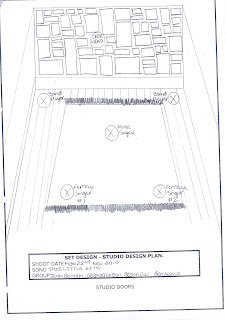
  • STUDIO SET PLAN- This is a simple photocopy of the set design plan as well as the brief that we showed to Dan. Aswell as any ammendments we may have made under Dan's instruction. In the industry this would be very precise and feature measurements of each of the materials used and dimensions of furniture or any decorations that would have been used. It will also include the lcoation on the set of each of the band members.
  • LIGHTING PLAN- This is also a photocopy of the studio design plan along with the brief about the specifics aswell such as any special things we would need such as dry ice machines. In our video we are also using gel's for the redheads so the brief will also have information about the gel's we are using and the number of gel that we need and in what order so if we need to get them again to do any follow-up shots we can easily.
  • PROPS AND WARDROBE- This is a very key area within the call sheet. It contains all the information about any props and wardrobe featured at any point during the video. It will explain each item of costuming in high detail aswell as who will be wearing it and where it is on loan from, whether it be the actor or the crew. It also features this information about each prop.
  • SCHEDULE- This is a detailed guide by timings of what will be happening when during the shoot day, it will allocate time for travelling, interior shots, exterior shots, lunch and clearing up. This will mean that every member of the cast and crew know what is happening when, it will also alert the crew if they are running behind schedule. Running late could cause potentially huge problems on the shoot day, for example, if we are doing exterior shots then we may want it light (naturally) so won't be able to shoot after 5:00pm.
  • STORYBOARD- This will include every page of the storyboard.
  • WORDS OF SONG (LYRICS)- This will include every single said word in the song. It may also be highlighted for the cast to make it easier for them to see at a glance. This is so that they can have the lyrics on the day and the cast will know where in the song they are at.
  • SHOOTING ORDER- A shooting order features 2 main things. It features a diagram of each of the camera locations that are used throughout the video. The second article included is the number of shots each camera position is used for. This is to reduce the camera movement and hopefully eliminate continuity errors occurring. This would be written like so: CAMERA PO.1: 1,7,9,15,17